
A Permanent Price Surge? Inside the Relentless Rise of Fuel Costs in Transportation
March 31, 2026
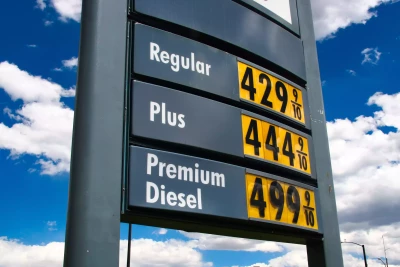 Fuel has always been one of the most consequential cost drivers in the transportation industry. But in today’s market, it has become something more: a persistent source of uncertainty that is reshaping how carriers and shippers operate.
Historically, diesel prices have demonstrated a clear asymmetry. When prices rise, they tend to rise quickly and dramatically. When they fall, they rarely return to previous lows. Instead, the industry resets around a new baseline. What once seemed expensive becomes the new normal.
This “stickiness” has forced transportation providers to recalibrate expectations. Price ranges that would have once been considered unsustainable are now viewed as manageable. Over time, the market adapts, but that adaptation comes at a cost.
Forecasting fuel prices is inherently complex. While supply and demand fundamentals matter, they are only part of the equation. Geopolitical instability, trade disruptions, and market sentiment all play a significant role in driving price volatility.
“We [predicted] a short conflict, but I think it’s headed more toward something longer,” Allianz Trade Chief economist Dan North says of the current mid-east conflict. “If that’s the case, the economy is going to go pretty slowly this year. At best, maybe two-and-a-half percent growth.”
Even experienced analysts rely on scenario-based forecasting rather than precise predictions. Each outcome carries vastly different implications for fuel pricing and, by extension, transportation costs. Complicating matters further, oil prices are influenced not only by physical supply but also by perception. Market sentiment, speculation, and risk aversion can amplify price swings beyond what fundamentals alone would suggest.
Will persistent conflict in the middle east lead to lasting pain at the pump? Watch the latest episode of the Stay In Your Lane Podcast for in-depth economic analysis.
For many consumers, the most visible impact of rising oil prices is at the gas pump. However, the true influence of fuel extends far beyond personal transportation. Oil is embedded in nearly every product and supply chain process.
“The oil price is in everything. Everything is dependent on oil,” says North. “It’s either made with oil or brought to you on a truck that runs with oil.”
From manufacturing materials to final-mile delivery, fuel costs are integrated into the price of goods at every stage. This makes diesel price volatility particularly impactful for the freight industry, where margins are already tight and cost fluctuations can quickly erode profitability.
During periods of high fuel prices, temporary tax relief measures are sometimes introduced at the state level. While these initiatives can offer short-term political appeal, their practical impact on the transportation industry is limited.
Fuel taxes function as a user-based funding mechanism for infrastructure. Reducing or eliminating them, even temporarily, often creates downstream funding challenges without meaningfully offsetting large-scale price increases. When diesel prices rise by dollars per gallon, a modest tax reduction provides only marginal relief. Plus, any reduction in tax revenue typically requires an offset elsewhere, reinforcing the idea that such measures are more cosmetic than structural.
The financial burden of rising fuel costs is not evenly distributed. Large fleets may have hedging strategies or fuel surcharge mechanisms in place, but small carriers and owner-operators are far more exposed. For these businesses, diesel is often the single largest variable expense. Even modest increases can translate into thousands of dollars in additional weekly costs. For operators working within narrow margins, that impact is immediate and significant.
Given that small businesses make up the overwhelming majority of the trucking industry, this pressure has broad implications for overall capacity and market stability.
 One of the most important realities facing the transportation industry is that previous benchmarks for “normal” fuel prices are unlikely to return. Each cycle of volatility establishes a new baseline, and over time, those baselines trend upward. For carriers and shippers alike, success depends on adapting to this evolving landscape. That means building flexibility into pricing models, strengthening operational efficiency, and maintaining a long-term perspective.
Fuel volatility is not a temporary disruption. It is a structural feature of the modern freight economy. Organizations that recognize and plan for this reality will be better positioned to navigate whatever comes next. While no one can forecast fuel prices with precision, businesses can develop strategies that account for a range of outcomes.
At Triple T Transport, we help our partners stay ahead of changing market conditions with data-driven insights, reliable capacity, and a commitment to transparency. Contact our team to learn how we can support your supply chain in an unpredictable fuel environment.