
From Fuel Prices to Freight Fraud: The Top 5 Challenges in Today’s Supply Chain
June 16, 2026
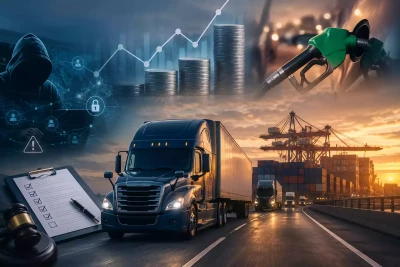 The transportation industry has always operated in a dynamic environment, adapting to changing markets, shifting regulations, and volatile economic conditions. However, today’s logistics professionals face a unique combination of challenges that are putting pressure on supply chains across the country. From rising operating costs to increasingly sophisticated criminal activity, transportation companies must navigate a landscape that grows more complex by the year.
Understanding these challenges is essential for anyone involved in moving freight. Here are five of the biggest issues impacting the transportation industry today.
High Interest Rates Continue to Impact Fleet Growth
Interest rates have a significant impact on every level of the supply chain. Modern trucking operations depend on access to capital for purchasing trucks, trailers, technology, and facility improvements. When interest rates rise, the cost of borrowing increases substantially.
For carriers looking to expand or replace aging equipment, higher financing costs can delay purchasing decisions and reduce profitability. Smaller carriers are often hit the hardest, as they may have fewer financing options available. The result is an aging fleet, reduced capacity growth, and increased maintenance costs as companies attempt to extend the life of existing equipment.
High interest rates also affect other parts of the supply chain. Manufacturers, distributors, and retailers may delay expansion projects or inventory investments, creating ripple effects that ultimately influence freight demand and transportation planning.
The Consequences of Transactional Procurement Strategies
For years, many companies focused heavily on securing the lowest possible transportation rates. During periods of excess capacity, some shippers adopted highly transactional procurement strategies designed to maximize short-term savings.
While these approaches often delivered immediate cost reductions, they sometimes came at the expense of building long-term carrier relationships. As market conditions shift and capacity tightens, many shippers are discovering the limitations of purely transactional partnerships.
In a recent appearance on the Stay In Your Lane Podcast, supply chain veteran Paul Newbourne made the case for prioritizing strong partnerships over short-term gains.
Reliable carriers that consistently invest in equipment, safety, technology, and driver retention often cannot sustain operations on rock-bottom rates indefinitely. When market conditions change, carriers naturally prioritize customers who have demonstrated loyalty and partnership through both strong and weak freight markets.
The transportation industry is increasingly recognizing the value of strategic relationships built on consistency, communication, and mutual support rather than focusing solely on the lowest bid.
Cargo Theft Is Becoming More Sophisticated
Cargo theft is not a new problem, but the methods criminals use are evolving rapidly. Organized theft rings are now leveraging advanced technology, data analytics, and even artificial intelligence to identify high-value shipments and execute sophisticated scams.
Fraudulent carrier identities, spoofed email domains, manipulated documentation, and fake dispatch communications have become increasingly common. Criminals can gather information from public sources, social media, freight boards, and other digital platforms to make their schemes appear legitimate.
In some cases, thieves impersonate legitimate carriers and brokers, securing loads before disappearing with entire shipments. These incidents can result in significant financial losses and major disruptions for shippers and customers.
Transportation companies are responding by strengthening verification processes, investing in cybersecurity measures, and implementing stricter load-tracking procedures. However, as technology advances, staying ahead of these threats remains an ongoing challenge.
Shifting Law Enforcement and Regulatory Priorities
Regulatory enforcement continues to evolve across the transportation industry. Recent efforts in English language proficiency enforcement, audits of commercial driver’s licenses, increased scrutiny of non-domiciled drivers, and other compliance initiatives are receiving greater attention from law enforcement agencies and regulators.
These efforts are largely intended to improve roadway safety and maintain industry standards. Safe roads benefit everyone, including carriers, drivers, and the motoring public.
At the same time, increased enforcement can create operational challenges. Carriers must devote additional resources to compliance programs, driver documentation, and auditing processes. Drivers may face increased inspections and verification requirements, while companies must stay current with changing regulations and enforcement priorities.
For transportation providers, balancing compliance requirements with operational efficiency has become increasingly important.
Rising Fuel Prices Remain the Industry’s Greatest Challenge
Fuel continues to be the single largest operating expense for many carriers. As diesel prices rise, transportation companies face immediate increases in operating costs that affect nearly every shipment they move.
Unlike some business expenses that can be controlled internally, fuel costs are largely driven by global market conditions, geopolitical events, and seasonal demand fluctuations. This makes budgeting and long-term planning particularly difficult.
Billy Barstow from Barstow trucking stopped by the podcast to discuss the impact of high fuel prices on small carrier operations like his.
When diesel prices climb significantly, carriers must absorb higher operating costs or attempt to recover them through fuel surcharges and rate adjustments. Smaller carriers often have less financial flexibility to withstand prolonged periods of elevated fuel prices, which can lead to reduced profitability or, in some cases, force businesses to exit the market entirely.
The effects extend beyond trucking companies. Higher transportation costs eventually impact manufacturers, retailers, and consumers, making fuel prices one of the most influential factors affecting the entire supply chain.
Looking Ahead
The transportation industry has never been without challenges, but today’s environment requires carriers and shippers to be more strategic than ever.
Organizations that focus on strong partnerships, proactive risk management, and long-term planning will be best positioned to navigate these obstacles successfully. While the challenges are significant, the transportation industry has repeatedly demonstrated its resilience. That adaptability will continue to be one of its greatest strengths in the years ahead.
At Triple T Transport, our 3PL services help shippers navigate today’s challenges with confidence. Through a trusted carrier network, advanced logistics technology, and a relationship-focused approach, we provide flexible 3PL solutions to keep freight moving in an increasingly complex marketplace. Contact us today to learn more about customized solutions to strengthen your supply chain.