
Midwest Freight Bottlenecks and Fuel Volatility: What Carriers Need to Know
April 28, 2026
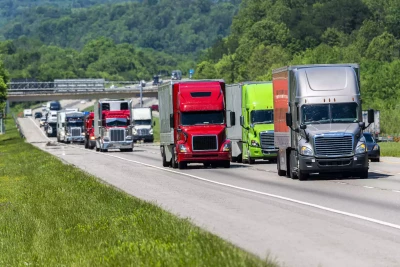 The Midwest has long served as one of the most critical freight corridors in the United States, with major interstates like I-70, I-65, I-75, and I-71 carrying a constant flow of goods between the South and the North. This dense network keeps supply chains moving, but it also creates some of the most persistent and costly bottlenecks in the country.
From a logistics standpoint, the Midwest is less a region and more a crossroads. Freight moving up from southern ports and manufacturing hubs converges with traffic heading down from the Great Lakes and Canada. The result is a high-volume, high-dependency network where even minor disruptions can ripple across multiple states.
When capacity is reduced on any one of these major arteries, the impact is rarely isolated. Instead, congestion shifts, intensifies, and often compounds at nearby interchanges and alternate routes.
Modern freight analysis relies heavily on real-time truck GPS data to identify where delays are most severe. By evaluating both truck speeds and traffic volume across a full calendar year, researchers can pinpoint the most problematic freight locations in the country.
“Our annual analysis uses our massive data set of truck GPS data. Hundreds of thousands of freight trucks coming in real time, which we can use for a whole host of analyses,” says American Transportation Research Institute President Rebecca Brewster of her organization’s work.
This dual-metric approach matters. A slowdown in a low-traffic area may be inconvenient, but a slowdown in a high-volume corridor can significantly disrupt national supply chains. When both speed and volume are negatively impacted, the result is a true bottleneck—one that drives up costs, delays shipments, and strains driver productivity.
Will challenges in the heartland spell disaster for the supply chain at large? Watch the latest episode of the Stay In Your Lane Podcast for the latest insights on this topic and more.
One notable example in the Midwest is the Brent Spence Bridge corridor along I-75, which has consistently ranked among the nation’s worst freight bottlenecks. Ongoing and upcoming repairs in that area are expected to further restrict capacity, potentially pushing
Infrastructure improvements are necessary, but they come at a cost, especially in freight-heavy regions. When key routes like I-65 or I-75 experience partial shutdowns or lane reductions, trucks don’t stop moving. Instead, they reroute.
This rerouting creates a domino effect. Secondary highways and nearby interchanges absorb additional traffic, often beyond their intended capacity. As a result, bottlenecks can emerge or worsen in areas that were previously manageable.
For carriers, this means that planning based on historical “problem spots” is no longer sufficient. Real-time awareness and flexible routing strategies are essential to staying ahead of shifting congestion patterns.
While infrastructure challenges are significant, fuel costs remain one of the most volatile and impactful variables in trucking operations.
Short-term spikes in fuel prices are difficult but often manageable. The real concern arises when elevated fuel costs persist over time. Prolonged increases can erode already thin margins, particularly for small and mid-sized fleets that lack the financial tools to hedge against price fluctuations.
Unlike larger shippers or multinational corporations, many carriers operate with limited administrative bandwidth. In fleets with fewer than ten trucks, leadership often wears multiple hats, managing operations, compliance, sales, and dispatch simultaneously. This makes it extremely difficult to implement complex financial strategies like fuel hedging.
As a result, sustained high fuel prices can have an outsized impact on the majority of carriers in the market.
The effects of fuel volatility influence the entire economy. Rising diesel prices translate into higher transportation costs, which ultimately impact the price of goods, airline travel, and consumer spending.
“If the war’s impact on fuel prices goes on longer term…that’s going to be a very significant impact on the industry,” warns Brewster. “A short-term spike, folks can weather. But continued high fuel prices will be very challenging.”
Even when fuel prices begin to stabilize, they rarely decline as quickly as they rise. This “stickiness” can prolong economic pressure across industries, making cost recovery slower and more unpredictable.
In an environment defined by congestion, cost volatility, and operational complexity, relying on instinct or outdated assumptions is no longer enough.
Access to reliable, industry-wide data allows carriers to benchmark their performance, identify inefficiencies, and make informed decisions about routing, pricing, and operations. It provides clarity on where a business stands relative to its peers and where improvements can be made.
 Perhaps most importantly, data fosters transparency in an industry where meaningful operational insights are not always openly shared. With objective benchmarks, carriers can move beyond guesswork and focus on measurable improvements.
The combination of infrastructure strain and fuel uncertainty presents a challenging road ahead for the trucking industry, particularly in high-traffic regions like the Midwest.
However, carriers that embrace data remain agile in their routing strategies, and proactively manage costs will be better positioned to navigate these challenges. While bottlenecks and fuel prices may be outside of any one company’s control, how you respond to them is not.
At Triple T Transport, we help carriers and shippers make smarter, data-informed decisions to keep freight moving efficiently, no matter how complex the landscape becomes. Contact us today to learn more about our industry-leading 3PL solutions.