

ICE Enforcement Push Takes Center Stage as CDL Rule Changes Reshape Trucking
May 5, 2026
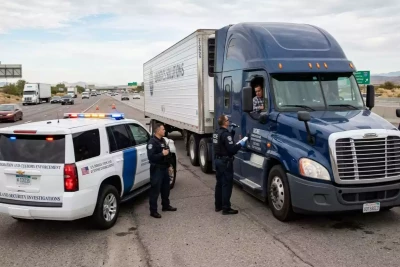 Recent federal and state-level actions targeting non-domiciled commercial driver’s license (CDL) holders are reshaping the trucking landscape. What began as a regulatory push focused on safety and credentialing has evolved into a broader and more controversial discussion involving immigration enforcement, labor supply, and operational capacity across the industry.
At a recent congressional hearing, lawmakers examined how closer coordination between U.S. Immigration and Customs Enforcement (ICE) and local law enforcement could accelerate the identification and detention of non-compliant commercial drivers. Officials from Oklahoma highlighted a 2025 initiative that deputized state and local officers to enforce certain federal immigration laws, resulting in hundreds of commercial drivers being taken into custody for alleged violations.
“Many of these drivers struggle with even basic English language proficiency and likely received their licenses from unscrupulous CDL mills,” said Tim Tipton, Commissioner of Oklahoma’s Department of Public Safety, in his testimony.
Proponents of this approach argue that it addresses long-standing concerns about unverified credentials and inconsistent enforcement across states. They also point to language proficiency challenges and questionable licensing practices as indicators of systemic vulnerabilities that need to be addressed.
But not all policymakers agree on the necessity or scope of these measures. Critics of the crackdown argue that the hearings themselves overstep jurisdictional boundaries and risk politicizing what should be a transportation safety issue. Concerns have also been raised about whether the focus on immigration status detracts from existing CDL standards that already apply uniformly to all drivers, regardless of citizenship.
Legal experts note that all CDL applicants must meet rigorous federal requirements, including demonstrated English proficiency, vehicle inspection knowledge, and road skills testing. From this perspective, the issue may be less about regulatory gaps and more about enforcement consistency at the state level.
“The CDL licensing standards are identical for U.S. citizens, lawful permanent residents, and documented immigrants alike regardless of citizenship or immigration status – all drivers must demonstrate English language proficiency, 30 different vehicle inspection control and driving skills, and demonstrate their knowledge in 20 different areas,” said Wendy Liu, an attorney for Public Citizen Litigation Group who testified on behalf of Michigan Representative Shri Thanedar.
Alongside this debate comes a significant regulatory development from the Federal Motor Carrier Safety Administration (FMCSA). The agency has finalized a rule that tightens eligibility requirements for non-domiciled CDL holders while refining implementation timelines introduced in its 2025 interim rule.
Key provisions of the final rule include:
- Eligibility restricted to specific visa categories, including H-2A, H-2B, and E-2
- Elimination of Employment Authorization Documents (EADs) as proof of eligibility
- Mandatory verification of immigration status through the SAVE system
The rule also introduces a more gradual implementation timeline. Rather than an immediate reduction in driver availability, the industry is expected to see a phased attrition of impacted drivers as existing CDLs expire over a five-year period.
While the total number of affected drivers is substantial, the revised timeline significantly alters how disruption will be felt across the supply chain. Instead of a sudden contraction, carriers are more likely to experience incremental tightening in driver availability—potentially around 40,000 drivers exiting the market annually.
This phased approach provides some breathing room for carriers to adjust recruitment strategies, but it does not eliminate the underlying challenge. With only a small fraction of displaced drivers expected to qualify under the new visa restrictions, competition for qualified labor is likely to intensify.
Some stakeholders warn that removing a large segment of experienced drivers could introduce short-term safety risks as less experienced operators fill the gap. Others argue that stricter vetting standards will ultimately elevate overall safety and professionalism within the industry.
 At the same time, regulatory compliance is becoming increasingly complex. Ensuring that all drivers meet evolving federal and state requirements will require tighter internal controls and more robust verification processes.
The intersection of transportation policy and immigration enforcement is introducing new variables into an already complex industry. Whether these changes ultimately improve safety or create new challenges will depend on how effectively they are implemented, and how quickly the industry adapts.
For now, one thing is clear: regulatory scrutiny around CDL credentialing is intensifying, and its ripple effects will be felt across the entire supply chain. Stay agile and informed with Triple T Transport as this important story continues to develop.