
The Impact of English Language Enforcement on Capacity: What the Data Shows
March 10, 2026
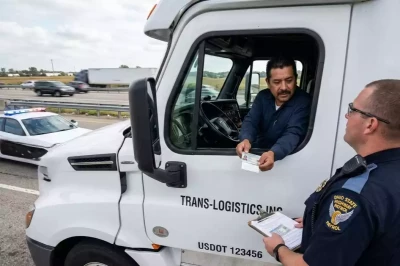 Recent headlines across the trucking industry have focused on the enforcement of English language proficiency requirements for commercial drivers. Some observers predicted that stricter enforcement would remove a significant number of drivers from the road, dramatically tightening available capacity. However, early data suggests the real impact may be much smaller than many expected.
Between June and January, more than 43,000 English language proficiency violations were recorded. While that number may sound significant at first glance, the more meaningful figure is the number of out-of-service violations—situations where a truck is actually removed from the road. Those totaled fewer than 13,000.
When analysts narrowed the data further to identify unique pieces of equipment affected, the number dropped again to roughly 11,000 trucks. In a nationwide freight market with millions of active vehicles, that represents less than half of one percent of total capacity. In practical terms, the impact falls well within the normal range of fluctuation in the trucking market.
“When we look at unique pieces of equipment… we’re just about 11,000 pieces of out-of-service equipment,” says FTR Transportation Technology Chairman Eric Starks. “That is less than half of one percent of capacity. It’s very minor and it’s within the margin of error.”
Has English language proficiency enforcement had a measurable impact on capacity? See what the data says in the latest episode of the Stay In Your Lane Podcast.
Where violations occur is just as important as how many occur. Texas accounts for the largest share of out-of-service violations, which is not surprising given its size, freight volume, and proximity to international borders. A handful of other states appear in the data as well, sometimes in unexpected places.
At the same time, some regions show little to no enforcement activity at all. This uneven enforcement environment creates an important dynamic within the industry: drivers and carriers often adjust their routes or operating areas based on where inspections are more or less likely to occur.
In some cases, drivers may simply avoid certain states known for stricter inspections. In others, they may choose not to run specific lanes at all if they believe enforcement will create risk or delays. This means some capacity may quietly disappear from certain regions without ever appearing in official violation statistics.
Even though direct out-of-service violations represent a small portion of the overall fleet, the broader labor pool for truck drivers has been shrinking. Industry employment data indicates that the number of general freight truckload jobs has been trending downward.
Recent revisions to employment data suggest the market may have already shed a significant number of trucking jobs. As updated figures continue to emerge, the total decline may prove even larger than initially reported.
“No matter what, the driver pool has shrunk dramatically,” says Starks. “We’ve basically gotten rid of all those drivers that we added during the pandemic.”
For logistics professionals, the takeaway from this data is nuanced. English language proficiency enforcement by itself is not removing enough trucks from the road to dramatically disrupt capacity. However, it is occurring at the same time the broader driver workforce is contracting.
That combination can create localized capacity shifts. Some lanes may tighten while others remain stable depending on where enforcement is most active and how drivers respond to it.
Market changes rarely happen in isolation, and staying ahead of them requires constant monitoring of regulatory developments, labor trends, and regional capacity conditions.
Triple T Transport helps our partners stay flexible in the face of these dynamics. By maintaining strong relationships with vetted carriers and closely tracking market conditions across the country, our team can quickly adjust routing strategies, secure reliable capacity, and keep freight moving even when disruptions occur.
When you need dependable support, count on Triple T Transport for responsive 3PL services that keep your freight moving.