
The Shipper’s Guide to FSMA Rule 204 and Food Traceability
October 16, 2026
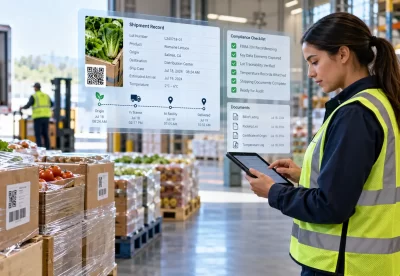 If your company ships fresh produce, seafood, shell eggs, soft cheeses, nut butters, or other foods on the FDA Food Traceability List (FTL), FSMA Rule 204 is probably on your logistics radar. The rule expands traceability recordkeeping across the food supply chain and requires covered businesses to maintain specific records that can help the FDA trace potentially contaminated food faster.
In today’s world, food logistics requires not only rate, capacity, and on-time delivery. Data accuracy, shipment visibility, and working with transportation partners who understand traceability expectations are crucial to delivering a trustworthy, high-quality product again and again.
What is FSMA 204?
Also known as the Food Traceability Rule, Rule 204 is part of the Food & Drug Administration’s (FDA) Food Safety Modernization Act (FSMA). It establishes additional traceability recordkeeping requirements for businesses that manufacture, process, pack, or hold certain foods. These foods appear on the Food Traceability List and are considered higher risk for foodborne illness outbreaks.
The rule centers on three important concepts: critical tracking events (CTEs), key data elements (KDEs), and traceability lot codes (TLC). A critical tracking event is a point in the supply chain when food is harvested, cooled, packed, shipped, received, or transformed in some way. Key data elements are the required pieces of information connected to those events, such as product descriptions, quantity, date, location, and traceability lot code. A traceability lot code is an often-alphanumeric descriptor used to identify a product lot through the supply chain.
When is the FSMA 204 Compliance Deadline?
The current FSMA Rule 204 compliance deadline is July 20, 2028. Although that may seem far away, shippers should begin preparing today. Compliance requires coordination across suppliers, carriers, warehouses, receivers, and distributors, not to mention the technology system updates that are necessary to make compliance simple. Building reliable data-sharing processes takes time and trial and error, especially when multiple trading partners with different systems touch the same shipment.
Why FSMA Rule 204 Matters for Shippers
Shippers who handle Food Traceability List items need to know where covered products come from, where they go, and which lot codes were involved. If the FDA requests traceability records during an investigation, covered entities may need to provide the required information quickly. That means gaps in shipment documentation could create an operational inconvenience at best, and a compliance and health risk at worst.
For food shippers, transportation partners play an important role in maintaining a clean chain of custody. Freight brokers understand that food logistics can help coordinate carrier requirements, collect accurate shipment data, communicate exceptions, and support documentation workflows from tender to delivery.
How a Freight Broker Can Help Shippers Prepare for FSMA 204
 Adjusting documentation processes to adhere to the new rule may seem like a lot to take on, but the right logistics partner can take the stress out of documentation and compliance. A freight broker like Triple T Transport can offer services that make compliance with FSMA Rule 204 easy.
- Carrier qualification: We vet and work with carriers who understand food-grade transportation, temperature control, documentation expectations, and communication requirements.
- Shipment visibility: Our advanced tracking tools help shippers monitor pickup, transit, delivery, temperature-sensitive moves, delays, and exceptions that could affect product integrity.
- Document coordination: We promise accurate bills of lading, appointment details, product descriptions, quantities, lot references, and delivery confirmation.
- Exception communication: Our experienced team members keep an eye on delays, rejected loads, temperature concerns, or routing changes so shippers can keep necessary documentation.
How to Choose the Right Freight Broker for Food Traceability
Not every freight broker is prepared for the increased expectations of traceability facing food shippers. When evaluating a new or existing broker, ask whether they have experience with refrigerated freight, produce, seafood, dairy, or other Food Traceability List categories. Ask how they vet carriers, how they communicate in-transit exceptions, and what documentation they help organize before, during, and after delivery.
The best logistics partners won’t replace your compliance team, but they can help reduce transportation blind spots. For shippers moving covered foods, that support can make FSMA Rule 204 preparation more manageable and help protect your customers, your brand, and your supply chain.
Work With a Freight Broker Who Understands Food Logistics
If your team is preparing for FSMA 204, now is the time to strengthen your transportation strategy. Partner with a freight broker who understands that demands of food shipping, traceability documentation, carrier communication, and supply chain visibility.
Triple T Transport has years of experience helping shippers deliver high-quality products across the country. Contact our team today to discuss how we can provide reliable, compliant-ready freight solutions for your business.